Mastering Celtic Knotted Brushes for Modern Digital Design
The intersection of ancient artistic tradition and modern digital workflow creates a unique space for designers seeking depth and authenticity in their work. Celtic knotted brushes represent more than just a stylistic choice; they are a bridge to a visual language that has captivated audiences for centuries. In an era where digital art often risks feeling sterile or overly uniform, the intricate complexity of interlaced patterns offers a tactile, organic quality that resonates with viewers. For professionals, creators, and hobbyists alike, integrating these elements into Adobe Illustrator or similar vector software is not merely about adding decoration—it is about enhancing the narrative weight of a design.
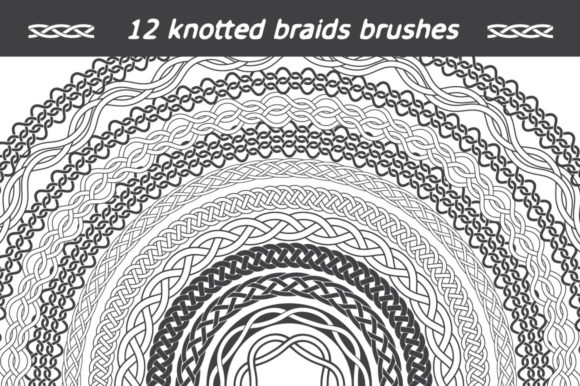
The demand for high-quality, editable assets has grown alongside the sophistication of design tools. Users no longer settle for static, rasterized images that lose clarity when scaled. Instead, there is a marked shift toward versatile, vector-based resources that allow for complete creative control. This is where specialized brush sets become indispensable. By utilizing a collection of twelve vector brushes styled as knotted braids, designers can streamline their workflow while maintaining the highest standards of aesthetic integrity. These tools empower users to paint complex patterns independently, adjusting colors and scales to fit specific project needs without sacrificing resolution or detail.
The Evolution of Traditional Motifs in Digital Spaces
Celtic art is characterized by its endless knots, spirals, and interlacing lines, symbolizing eternity and the interconnectedness of life. Historically, these patterns were carved into stone, illuminated in manuscripts, or woven into textiles. Today, the medium has changed, but the appeal remains potent. The transition from physical media to digital vectors requires a nuanced approach. A simple scan of a historical pattern often lacks the flexibility needed for modern branding, packaging, or web design. This is why dedicated Celtic knotted brushes have gained traction among professional illustrators.
Modern workflows prioritize efficiency without compromising quality. Creating a seamless, mathematically correct Celtic knot from scratch can be time-consuming, requiring precise path manipulation and anchor point adjustment. Pre-built vector brushes solve this bottleneck. They provide the structural foundation of the knot, allowing the designer to focus on composition, color theory, and application. This evolution reflects a broader trend in the creative industry: the move toward modular design assets. Professionals are increasingly looking for tools that handle the technical heavy lifting, freeing up mental energy for conceptual innovation.
Furthermore, the resurgence of interest in heritage and craftsmanship influences current market preferences. Consumers are drawn to brands that convey history, stability, and artisanal quality. Incorporating Celtic motifs can subtly communicate these values. Whether used in a logo for a craft brewery, a border for a wedding invitation, or a texture in a fantasy game interface, these patterns carry cultural weight. However, to avoid cliché, the execution must be crisp and contemporary. Vector formats ensure that the lines remain sharp and clean, avoiding the pixelation that can make traditional motifs look dated or low-resolution.
Technical Advantages of Vector Brush Sets
When evaluating design resources, the file format is as critical as the aesthetic. The availability of these twelve knotted braid brushes in both AI CC and EPS 10 formats addresses a wide range of user needs. Adobe Illustrator CC files are ideal for users already embedded in the Adobe ecosystem, offering seamless integration with existing libraries and workflows. The AI format preserves editability, allowing for direct manipulation of brush definitions and stroke profiles within the software.
Conversely, the EPS 10 format ensures backward compatibility and broad software support. Many professional printers and older design applications still rely on EPS standards for reliable output. By providing both formats, the resource accommodates freelancers working with diverse client requirements, as well as agencies managing legacy systems. This dual-format approach underscores a commitment to accessibility and practical utility, recognizing that not all creators work in the latest software versions.
The core benefit of these vector brushes lies in their scalability and editability. Unlike raster brushes, which can become blurry when enlarged, vector paths remain crisp at any size. This is crucial for applications ranging from small business cards to large-scale signage. Moreover, the ability to independently paint these patterns in other colors transforms a single asset into a versatile toolkit. A designer can take a standard black braid and instantly adapt it to a brand’s specific color palette, creating variations that feel custom-made rather than stock-derived. This flexibility supports rapid prototyping and iteration, key components of modern design processes.
Practical Applications for Creators and Businesses
Understanding the technical specifications is only half the battle; knowing how to apply these tools effectively is where value is realized. For graphic designers, Celtic knotted brushes can elevate typography. Wrapping a knot around a monogram or using it as a divider between sections of text adds a layer of sophistication. It breaks the monotony of straight lines and introduces visual rhythm. When used sparingly, these elements guide the viewer’s eye and create focal points without overwhelming the primary message.
Brand identity specialists can leverage these brushes to create distinctive marks for clients in industries such as hospitality, publishing, or luxury goods. The intricate nature of the knots suggests attention to detail and quality. For example, a boutique hotel might use a subtle knotted border on its stationery to evoke a sense of timeless elegance. Because the brushes are vector-based, the resulting logos or patterns can be applied consistently across various touchpoints, from digital screens to embroidered uniforms, ensuring brand coherence.
Educators and hobbyists also find significant value in these resources. For those teaching digital illustration, these brushes serve as excellent examples of how traditional art forms can be translated into digital tools. Students can study the underlying paths to understand how interlacing works, then experiment with modifying the brushes to create their own variations. Hobbyists engaged in calligraphy or digital painting can use the knotted braids to embellish their work, adding professional-grade details that would otherwise require advanced technical skills to draw manually.
- Packaging Design: Use knotted borders to frame product information, adding a premium feel to labels and boxes.
- Web and UI Design: Incorporate subtle knot elements as background textures or section dividers to add depth to flat design interfaces.
- Textile and Surface Pattern: Repeat and arrange the brushes to create seamless patterns for fabric printing or wallpaper designs.
- Event Stationery: Enhance invitations and programs with elegant, culturally rich decorative elements.
Customization and Creative Freedom
The true power of this twelve-brush set lies in its adaptability. The prompt notes that users can "independently paint these patterns in other colors and get more brushes to your illustrator software." This feature is pivotal for maintaining originality. Stock assets risk becoming recognizable if used without modification. By changing stroke weights, adjusting colors, or combining different brushes from the set, creators can generate unique compositions that stand out.
Consider the workflow: a designer selects a basic knotted braid, applies a gradient mesh to give it a three-dimensional metallic look, and then adjusts the opacity to blend it with a background image. The result is a custom graphic that feels bespoke. This level of customization is essential for professionals who need to deliver unique solutions to clients. It moves the resource from being a simple clip-art substitute to a foundational tool for creative exploration.
Moreover, the variety within the twelve brushes allows for dynamic composition. Some knots may be tighter and more compact, suitable for corners or small accents. Others may be looser and more flowing, ideal for framing larger areas. Mixing these styles within a single project creates visual interest and hierarchy. Designers can experiment with overlapping knots, creating complex interlaced structures that suggest depth and movement. This experimental approach aligns with contemporary design trends that favor layered, textured aesthetics over minimalism alone.
Integrating Celtic Elements into Modern Workflows
Adopting new tools requires a shift in mindset. For designers accustomed to drawing every line manually, switching to brush-based workflows might initially feel like a shortcut. However, viewing these Celtic knotted brushes as building blocks rather than finished products changes the perspective. They are akin to high-quality ingredients in a recipe; the final dish depends on how they are combined and seasoned. Integrating them into a modern workflow involves setting up efficient layer structures, using global colors for easy updates, and leveraging Illustrator’s appearance panel to non-destructively edit stroke properties.
This approach supports agile design practices. When client feedback requires a color change or a slight adjustment in pattern density, vector brushes allow for quick revisions. There is no need to redraw entire sections. This efficiency translates to cost savings and faster turnaround times, benefiting both freelancers and agencies. In a competitive market, the ability to iterate quickly while maintaining high visual standards is a significant advantage.
Ultimately, the relevance of Celtic knotted brushes extends beyond nostalgia. They offer a solution to the challenge of creating intricate, meaningful design in a fast-paced digital environment. By providing high-quality, editable, and versatile vector assets, this twelve-brush set empowers creators to honor traditional aesthetics while embracing modern technology. Whether for a professional project or a personal exploration, these tools open up new possibilities for expression, ensuring that the ancient art of the knot continues to thrive in the digital age.